



The Tub Breathes: Why Wood Cools Rice Better Than Ceramic
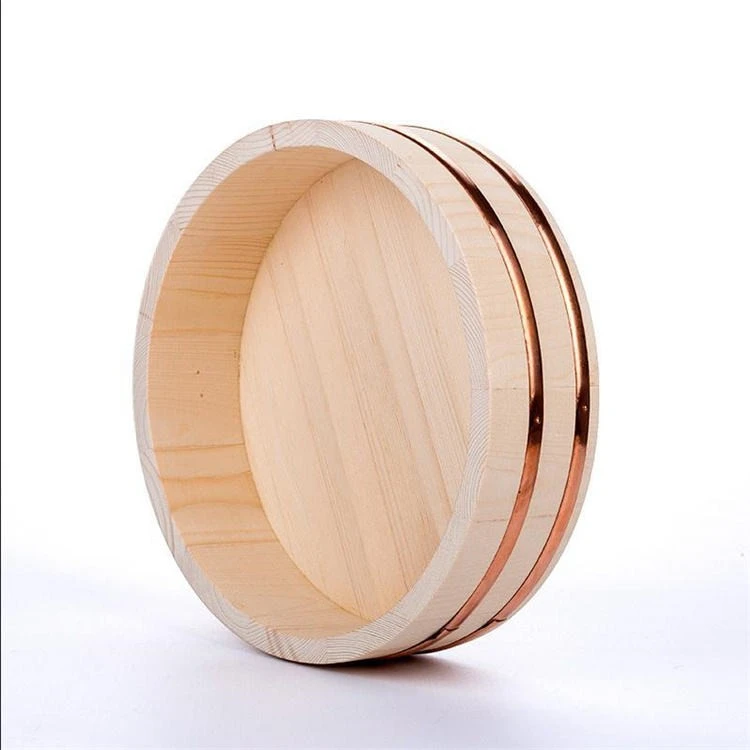
Rice straight out of the cooker is still cooking when it comes off the heat, and the vessel it lands in decides whether it finishes as glossy grains or a sticky block. The Wooden Sushi Rice Tub is a working vessel, not a serving piece: vertical staves under two hoop bands, wide and shallow, open at the top so steam leaves upward while a paddle folds vinegar through the bed. Ceramic holds the heat in. Glass sweats it back onto the rice. Wood takes it out through the grain and gives it nowhere to pool.
What Kills a Wooden Tub
Water is what kills a hangiri, and it kills it slowly. Left full of water, the staves swell until the base splits along a joint, and no amount of drying puts it back. Wash with a damp cloth and a soft brush, rinse fast, and stand it on its side so air reaches the base. Dry it in shade rather than in sun, because direct heat opens the joints the same way soaking does. Before the first use, wet the inside, wipe it out and let it stand overnight, so the staves take up and the hoops sit tight. Never put it in a dishwasher.
Moisture Content and Repeat Orders
The variable that decides whether a tub survives its first month is the moisture content of the wood at assembly, not the species on the label. Staves dried too fast split at the ends; staves still wet shrink away from the hoops and the wall bellies out. Each batch is assembled from one drying lot so the tubs in a carton behave the same way, and a reorder is matched to the same lot and hoop gauge. Your mark can be burned into the base rather than printed on it, which survives the wiping this vessel gets.
"A tub that is never wet lasts ten years. A tub that is soaked once lasts one."
Technical Breakdown for Procurement Managers
- Material: Vertical wood staves, unfinished inside; two hoop bands; no lacquer on the working surface.
- Technique: Staves bent and jointed by hand, hoops fitted while the wood is still tight; base set into a rabbet.
- Style: Round hangiri, wide and shallow, open top; hardwood bands at the waist and foot.
- Safety: Food-contact wood; damp-wipe only; never soak and never dishwasher; dry on its side in shade.
- Structure: Open tub, two hoops, flat base; no lid as standard.
- Customization: Mark burned into the base; size variation on volume orders.
- Lead Time: Sample service available; seasoning and assembly time confirmed at order.
- Logistics: Tubs nested with hoops protected; bulk export cartons.
Want This Tub in Your Own Size or Branding?
Tell us the diameter you need and the quantity, and we will come back with a quotation and a sample timeline.
Hot Tags: wooden sushi rice mixing tub, round hangiri with hoop bands, China, suppliers, manufacturers, factory, wholesale